Jun 16, 2026
Needle phobia in adults: a serious problem with a simple solution
Needle phobia in adults: a serious problem with a simple solution
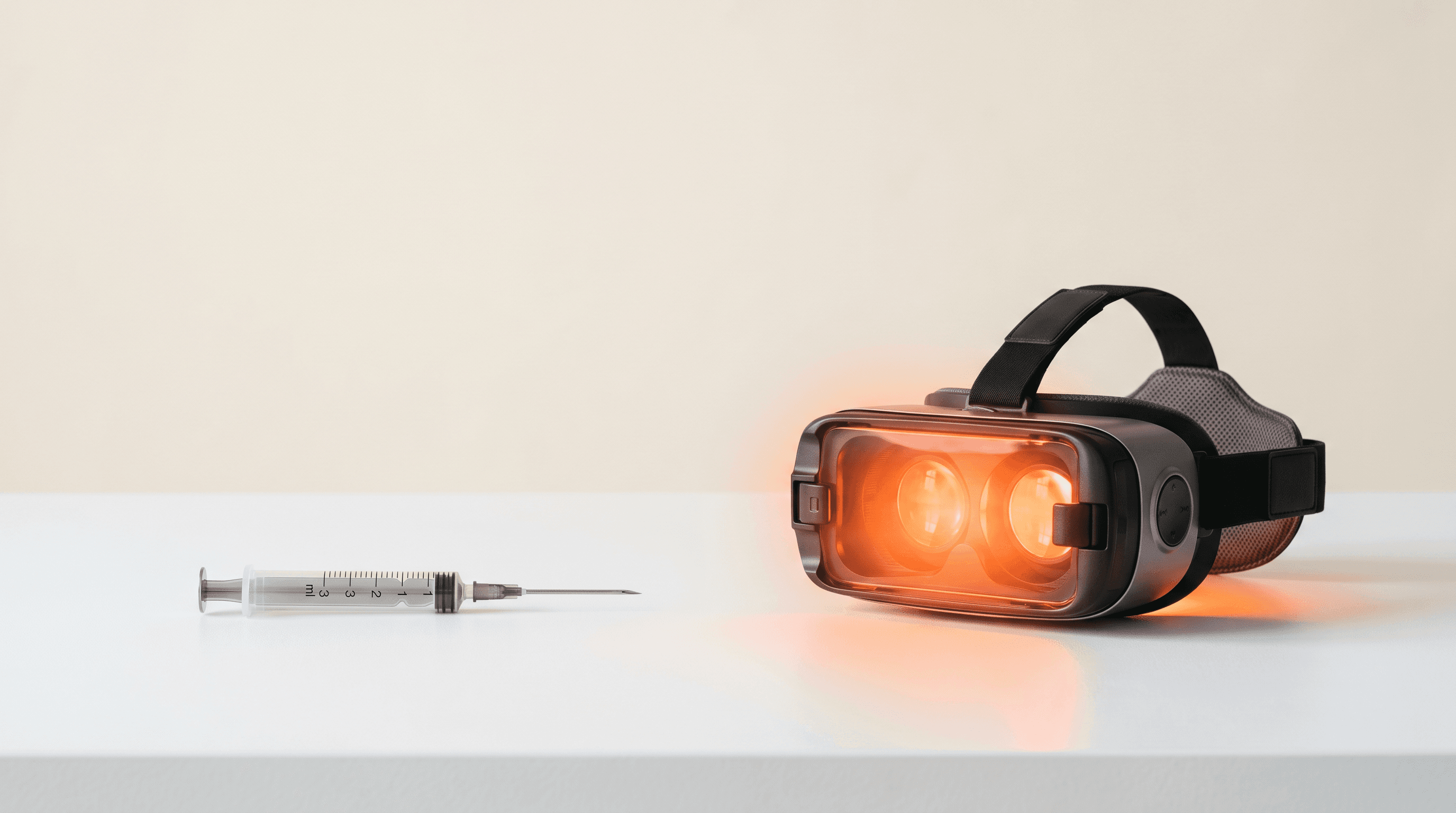
It's not a whim
The 45-year-old man who faints during a blood draw is not "hypersensitive". The 30-year-old woman who hasn't had blood work done in 5 years is not "negligent". The teenager who missed three vaccination boosters is not "anti-vax".
They suffer from trypanophobia: the pathological fear of needles. And they are far more numerous than we think.
The numbers
10% of the adult population suffers from clinically significant trypanophobia
20-30% experience high anxiety levels during needle procedures, even without a formal diagnosis
16% avoid vaccinations or blood tests due to fear
7% experience vasovagal reactions (fainting) during or after the injection
The prevalence is likely underestimated because those who suffer from it... avoid healthcare facilities
In Italy, with a population of 60 million, we are talking about approximately 6 million people for whom every interaction with a needle is a source of significant suffering.
The origin: almost always in childhood
Most needle phobias do not appear out of nowhere. They have a precise origin: a traumatic experience during childhood. The same mechanism that shapes procedural memories explains why the phobia persists for decades. A painful blood draw. A poorly managed vaccination. A hospitalization involving repeated procedures.
The child's brain registers: needle = danger. And that circuit is not erased as they grow up. It gets reinforced with every subsequent avoidance.
The consequences on health
Trypanophobia is not an aesthetic discomfort. It has concrete health consequences:
Lack of prevention
Blood tests postponed for years
Tumor markers not monitored
Undiagnosed diabetes
Nutritional deficiencies ignored
Lack of vaccination
Missed boosters
Seasonal flu not prevented in at-risk individuals
COVID-19: a percentage of the unvaccinated were so due to phobia, not ideology
Lack of treatment
Intravenous therapies refused
Inability to place vascular access devices
Sedation requested for minor procedures (with additional costs and risks)
Systemic impact
Inappropriate ER visits (the patient waits until a crisis because they avoided prevention)
Late diagnoses
Preventable complications
The classic response: insufficient
What does the healthcare system offer an adult with trypanophobia today?
"Look the other way" (doesn't work on the physiological response)
EMLA cream (reduces pain but not fear, which is the real problem)
Pre-procedure anxiolytics (side effects, not scalable, requires prescription)
CBT psychotherapy (effective but long, expensive, few have access to it)
None of these solutions are practical in the context of a blood collection center handling 100 patients a day.
VR as a practical and scalable solution
Immersive therapy addresses trypanophobia when it matters most: during the procedure.
It is not psychotherapy. It doesn't "cure" the phobia in the classic sense. But it does something more immediate: it allows the procedure to take place without a crisis.
The trypanophobic patient wears the headset. They don't see the needle. They don't see the preparation. They don't see the blood. Their brain is occupied elsewhere. The procedure happens. The patient discovers it's already over.
And here, something interesting happens: every positive experience weakens the phobic circuit. The brain registers: "I went, and nothing terrible happened." Session after session, the fear decreases.
VR is not just a palliative. It is also a form of gradual assisted exposure — the gold standard for treating phobias, but without the cost and complexity of formal psychotherapy. Here is how VR works in blood draw centers and why prevention in pediatric patients is the most important investment.
The trypanophobic patient: how to recognize them
Not everyone declares it. Many are ashamed. Signals for staff:
Arrives very early and stays in the waiting room for a long time without checking in
Sweaty hands, paleness, rapid breathing
Repeatedly asks "How long does it take?" or "How much does it hurt?"
Obsessively stares at or obsessively avoids looking at the extraction area
Has a history of fainting or multiple attempts
Accompanied by someone "just in case"
Has rescheduled the appointment multiple times
For these patients, the offer of VR should be proactive, not on demand.
The impact on public health
If VR allows even just 50% of people with trypanophobia to regularly get their blood tests done, the impact on public health is enormous:
More early diagnoses
More prevention
Fewer ER visits for preventable emergencies
Better vaccine coverage
The cost: one headset and 60 seconds of setup.
The return: millions of tests that today go unperformed.
Trypanophobia is not a whim. It is a barrier to accessing health. Lemons in the room tears it down every day in over 30 Italian healthcare facilities: an MDR-certified medical device, ready in 10 seconds, that finally allows millions of people to get the tests they have postponed for years.