Jun 11, 2026
How to Choose a VR Solution for Your Department: A Guide for Decision Makers
How to Choose a VR Solution for Your Department: A Guide for Decision Makers
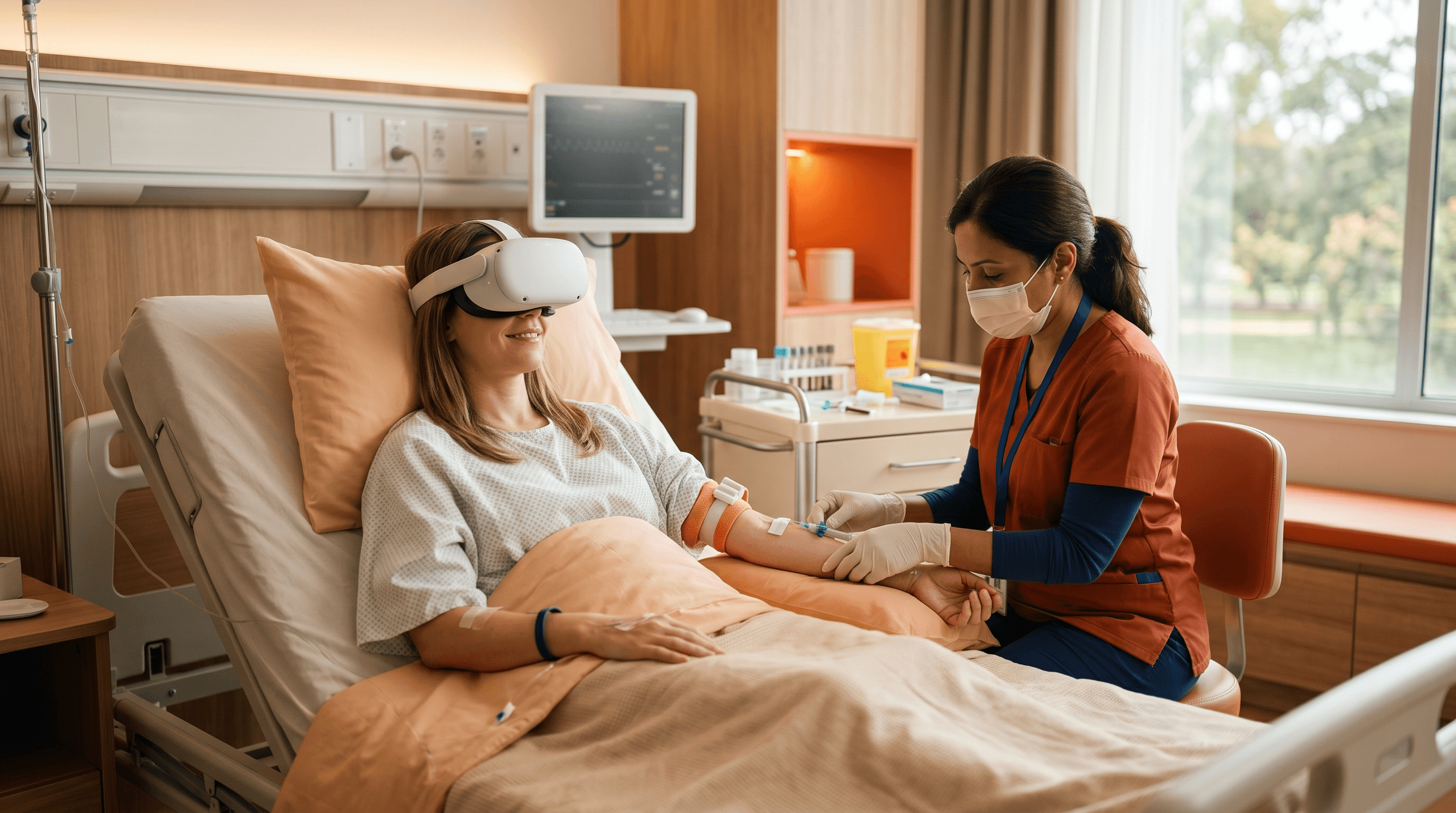
The market is growing. Options are multiplying.
If you are considering introducing virtual reality into your department, you have probably already seen several solutions on the market. Adapted consumer headsets, vertical healthcare platforms, generic relaxation apps, certified medical devices.
They are not all the same. And the difference between an investment that works and one that ends up in a drawer lies in the criteria you use to choose.
The 7 criteria that matter
1. Certification as a medical device
This is the first filter. A VR solution used on patients in a clinical setting must be certified as a medical device according to the MDR 2017/745 regulation.
Why?
Ensures the product has been developed according to a quality management system (ISO 13485)
Ensures risk analysis (ISO 14971)
Ensures that proposed performances are backed by evidence
Protects you legally in case of audits or adverse events
A Meta Quest headset with a meditation app downloaded from the store is NOT a medical device. You cannot use it clinically in a compliant manner. To understand what distinguishes a certified device from a consumer gadget, it is worth reading how simplicity of design drives real adoption.
What to ask: "Are you registered on EUDAMED? What is your SRN? What MDR class do you have?"
2. Specific clinical evidence
Studies "on VR in general" are not enough. You need evidence on the specific product you are considering, or at least on products with the same mechanism of action.
What to ask: "Do you have clinical studies on your product? RCTs or just case reports? On what population? With what outcomes?"
3. Ease of use for staff
The most advanced technology in the world is useless if the nurse cannot get it started in less than 30 seconds with an anxious patient right there.
The criteria:
Setup time under 60 seconds
No technical skills required
Intuitive interface without a manual
Offline operation (no dependency on hospital Wi-Fi)
Battery life for a full shift
What to ask: "Can I see a live demo with my staff? How long does the training take? Does the headset work without internet?"
4. Validated and appropriate content
VR content is not all the same. A shooter game is not suitable for an oncology patient. A meditation app for adults does not work for a 5-year-old child.
What to consider:
Differentiated content by age (pediatric vs adult vs geriatric)
Differentiated content by context (short procedure vs long session)
Developed with clinical advice (psychologists, anesthesiologists, pediatricians)
Updated over time (not the same catalog for 3 years)
5. Hygiene and infection control
In a hospital environment, hygiene is non-negotiable.
What to check:
Headset materials compatible with hospital disinfectants
Sanitization protocol between patients (time, products)
Replaceable contact parts (facial padding)
Compliance with your facility’s IPC protocols
6. Cost model
Pricing models in the market vary enormously:
One-time purchase: you buy the headset and software. Risk: obsolescence, no updates, no support after purchase.
Annual subscription (SaaS): you pay a recurring fee that includes hardware, software, updates, support, and hardware replacement in case of malfunction. Lowest risk, predictable cost.
Pay per use: you pay per session. Suitable for low volumes, expensive for high volumes.
What to ask: "What is included in the subscription? Software updates? Hardware replacement? Technical support? Staff training?"
7. Support and implementation guidance
The deployment of a new technology in a department does not end with the delivery of the headset. It requires:
Initial staff training
Support during the first days/weeks of use
A designated contact person for technical issues
Periodic updates on new content
Usage reporting (how many sessions, for which procedures, feedback)
What to ask: "Who is our contact person? How do I reach them? What are your SLAs for issues? Do you provide usage reports?"
Questions NOT to ask
"Does it work?" — Yes, VR works. The evidence is robust. The right question is: "has this specific product been validated in my clinical context?"
"How much does it cost?" as a first question — Cost only makes sense in relation to value. First understand what it solves, then evaluate the price.
"Can we use a consumer headset?" — No, not in a clinical setting. No certification = no regulatory compliance = risk for the facility.
The final checklist
The right choice is the one your staff will use every day without thinking twice. Lemons in the Room meets all 7 criteria in this guide: MDR Class I certification, clinical evidence, 10-second setup, pediatric and adult content, validated hygiene protocol, all-inclusive annual fee, dedicated support. Request a free demo in your department →
Read also: Complete Guide to Immersive Therapy | Less Drugs, Same Results