Jun 23, 2026
10 seconds to change an experience: Why simplicity is everything
10 seconds to change an experience: Why simplicity is everything
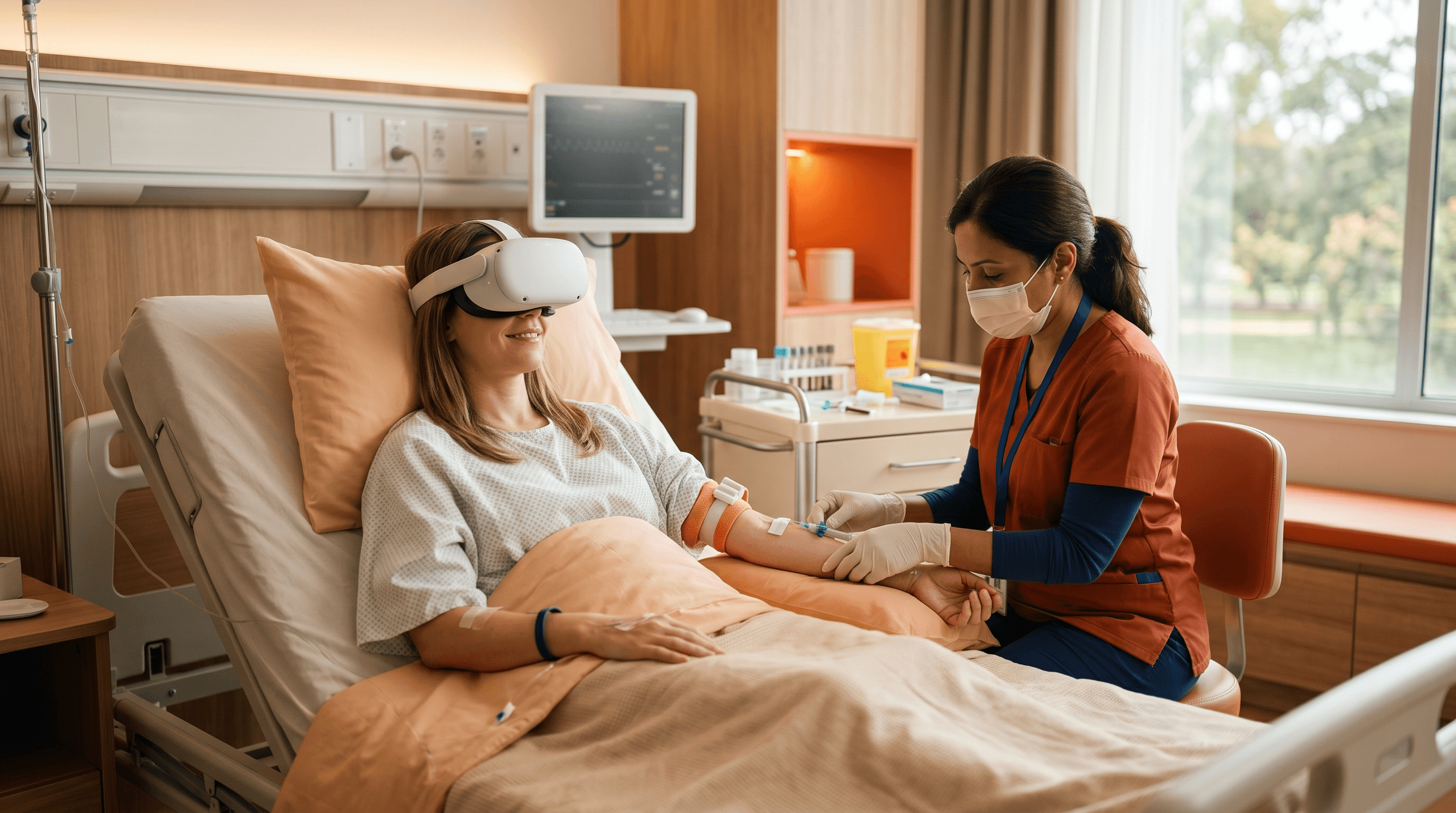
The 10-Second Rule
A hospital ward is not a research lab. It's not a demo at a conference. It's not a YouTube video.
It is a place where things happen quickly, where staff are under pressure, where every second taken away from a procedure is an extra second for the next patient.
In this context, if a technology does not activate in less than 10 seconds, it will not be used. Not out of ill will. Out of survival.
Why Healthcare Technology Ends Up in Drawers
Every hospital has a closet full of devices bought and never used. Patient satisfaction tablets. Monitoring wristbands. Apps for internal communication.
Why do they end up there? Almost never because they don't work. Almost always because:
They require too many steps to start
They require a password every time
They require Wi-Fi (which in a hospital never works when you need it)
They require training that staff turnover makes obsolete in 3 months
They require maintenance that nobody has the time to do
The technology that survives in a ward is the one that requires nothing. The one that is there, ready, always.
Designing for Chaos
Designing a device for a hospital means designing for chaos. For the night shift with half the staff. For the nurse on their first day. For the moment when the patient is crying and you have 30 seconds to intervene.
The resulting design choices are radical:
Zero setup at the point of use
The headset must be ready. Always. Battery charged. Content preloaded. No blocking updates. Turn it on and it works.
No login
No operator should have to type credentials with gloves on. Access must be immediate, without barriers.
Selection in 2 taps
The selection of the experience must be: adult or child patient? Short or long procedure? Done. Everything else is automatic.
Single hardware unit
One headset. Not a headset + a controller + a PC + a dedicated router. An object you grab from the shelf and put on the patient.
Offline operation
The hospital's Wi-Fi network is unreliable by definition. Everything must work without a connection. Content is stored on the device.
The Nurse as the Primary User
Therapeutic VR is not a product for the patient. It is a product for the nurse.
It is the nurse who pulls it out. Who positions it. Who chooses the experience. Who sanitizes it afterward. If the nurse finds it inconvenient, slow, or complicated, they won't use it. And the patient will never benefit from it.
Designing for the nurse means:
Minimal weight (you handle it with one hand)
Quick cleaning (one wipe, 10 seconds)
No fragility (it drops and does not break)
Battery life for an entire shift (8+ hours of standby battery)
Immediate visual feedback (you know it's working without looking at a screen)
The Definitive Test
Want to know if a VR system will survive on a ward? Take this test:
Give the headset to a nurse who has never seen it before. Tell them "start it up". If the patient is immersed within 30 seconds, it will work. If after 30 seconds they are still looking for the right button, it will end up in the drawer within a month.
Simplicity is not a feature. It is THE requirement. Without it, everything else — evidence, effectiveness, ROI — is theoretical.
The Hidden Complexity
Making something look simple is enormously complex. Behind a headset that starts up in 10 seconds, there is:
Software that updates automatically at night
A battery managed via wireless charging on its base
Content pre-selected by algorithms suggesting it based on age and procedure
Automatically tracked sanitization
Usage reports generated without human intervention
All this complexity is invisible to the operator. And it must be. The operator only sees: grab, position, it works.
The Mantra
If you need a manual, you got it wrong.
If you need more than 30 minutes of training, you got it wrong.
If you need an IT technician, you got it wrong.
If it doesn't work the same on the night shift as it does on the morning shift, you got it wrong.
The only way to get technology adopted in healthcare is to make it disappear. To make it as transparent as a pulse oximeter: you grab it, you use it, you don't think about it. It's the same philosophy that transforms the nurse's role: from gatekeeper to facilitator.
10 seconds. That is all the time you have.
The best technology is the one that doesn't feel like technology. It's the one that is there, works, and leaves staff free to do what they do best: care for people. Lemons in the room was designed with this obsession: a single object, zero configuration, offline functionality, ready in 10 seconds. Already in over 30 facilities. Always.
Read also: How to Choose a VR Solution for Your Ward | Complete Guide to Immersive Therapy